
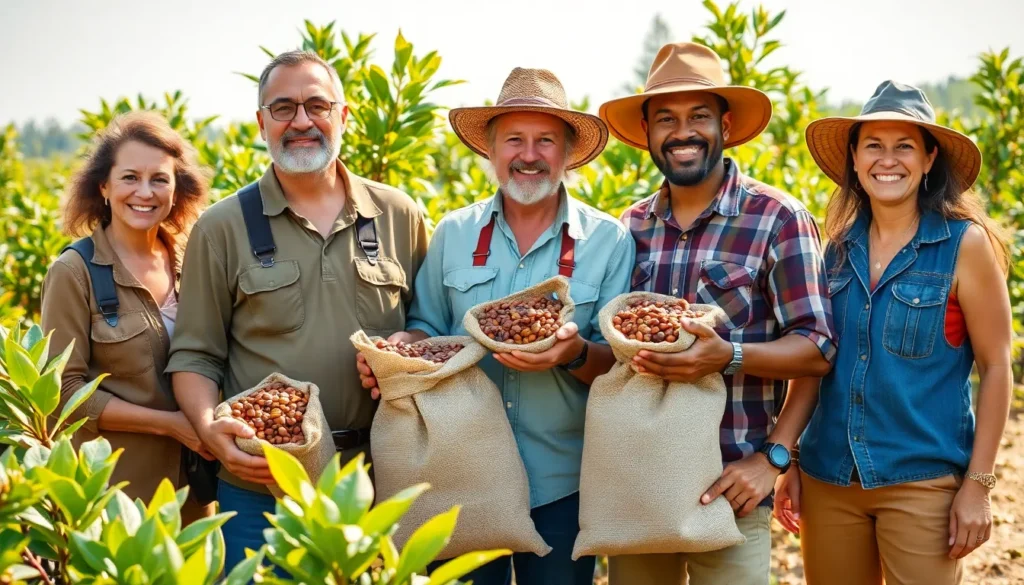
In a world where coffee beans can come with a side of guilt, fair trade certification steps in like a superhero with a cape made of ethically sourced cotton. It’s not just a label; it’s a promise that farmers get a fair shake for their hard work. Imagine sipping your morning brew, knowing it helps empower communities instead of lining the pockets of corporate giants.
But wait—there’s more! Fair trade isn’t just about warm fuzzies; it’s about quality, sustainability, and making a real difference. As consumers become more conscious, they’re not just buying products; they’re investing in a better world. So, let’s dive into the ins and outs of fair trade certification and discover how it’s changing the game, one delicious cup at a time.
Overview of Fair Trade Certification
Fair trade certification denotes an established standard aimed at ensuring equitable trade practices. This designation commonly applies to products like coffee, cocoa, tea, and other agricultural goods. Producers within the fair trade system receive a price that reflects the true cost of sustainable production, fostering economic stability.
Organizations responsible for fair trade certification include Fair Trade International and the World Fair Organization. These entities set criteria that encompass environmental stewardship, fair wages, and safe working conditions. Certifications serve as indicators for consumers committed to ethical sourcing.
Transparency remains crucial in this framework, as certified producers must adhere to specific practices, promoting accountability in supply chains. The commitment to sustainability not only enhances product quality but also elevates community living standards. Consumers often choose fair trade products to support these responsible practices, knowing their purchases directly impact farmers and workers positively.
Fair trade certification facilitates access to global markets, empowering small-scale farmers and artisans. This practice encourages direct trade relationships, ultimately reducing the influence of intermediaries. As a result, communities witnessing fair trade benefits experience revitalization through improved education and health infrastructure.
Educating consumers about fair trade certification fosters informed purchasing decisions. Awareness around these systems can drive demand for ethically sourced goods. Making conscious choices contributes to nurturing a global economy that respects and uplifts its participants.
Benefits of Fair Trade Certification
Fair trade certification offers numerous advantages that extend beyond producers to encompass communities and the environment.
Economic Impact on Producers
Producers benefit significantly from fair trade certification through fair wages that reflect the actual cost of sustainable production. They receive consistent pricing, which fosters financial stability amid market fluctuations. Access to global markets allows small-scale farmers and artisans to establish direct trade relationships, enhancing their income while eliminating the influence of intermediaries. Improved income facilitates investments in education and healthcare, leading to healthier and more educated communities. Additionally, income generated from fair trade often contributes to local economies, promoting growth and reducing poverty levels.
Environmental Benefits
Environmental benefits stem from fair trade practices prioritizing sustainable agriculture. Certified producers implement eco-friendly farming techniques that minimize the use of harmful chemicals, leading to healthier ecosystems. Crop diversity is encouraged, enhancing resilience against pests and climate variations. Responsible waste management practices reduce pollution, promoting cleaner environments. Protecting natural resources aligns with the principles of fair trade, ensuring future generations can continue farming sustainably. These practices contribute to biodiversity conservation, benefiting not only the producers but also the community and the planet.
Challenges in Fair Trade Certification
Fair trade certification faces several challenges that impact its effectiveness and reach.
Cost and Accessibility
Certification fees create barriers for small-scale producers, limiting their ability to participate. High initial costs deter some farmers from seeking certification, even when they desire to trade ethically. Ongoing fees for maintaining certification can strain limited resources, preventing producers from accessing the fair trade market. Geographic location also influences accessibility; rural farmers often lack resources and support systems. Access to training and information about fair trade practices might be uneven, leaving some producers unaware of the benefits of certification. Limited availability of certification bodies in certain regions further complicates the process.
Criticism and Misunderstandings
Critics often argue that fair trade certification does not always reach its intended beneficiaries. Some consumers misunderstand the certification’s criteria and believe that products labeled as fair trade always guarantee direct benefits to producers. Misconceptions about the profit margins and pricing structures can lead to skepticism about the certification’s true impact. Additionally, some producers feel excluded from the certification process due to perceived complexity and bureaucratic hurdles. Questions about accountability and transparency can heighten doubts regarding the fairness of the practices. Sustained education and outreach are essential to clarify these issues and improve consumer trust in fair trade certification.
Fair Trade Certification Organizations
Fair trade certification organizations play a crucial role in maintaining ethical trade standards. They ensure that producers receive fair compensation and adhere to sustainable practices.
Notable Certifiers
Fair Trade International leads the list of recognized certifiers, setting global standards for fair trade practices. The World Fair Organization also offers robust certification, focusing on market access and consumer awareness. Other notable certifiers include Fair Trade USA, known for its efforts in the North American market. Each organization establishes specific guidelines and criteria that producers must meet to achieve certification, reinforcing ethical sourcing in various sectors.
Standards and Requirements
Standards for fair trade certification encompass several key elements. Environmental sustainability remains a priority, with practices promoting soil health and biodiversity. Producers must provide fair wages that meet or exceed local living standards to ensure economic stability. Safe working conditions also factor heavily into the requirements, ensuring well-being for all workers. Transparency in supply chains is vital, as organizations demand traceability from producers. These standards collectively enhance community growth and encourage responsible agricultural practices, benefiting both producers and consumers alike.
Fair trade certification stands as a beacon for ethical consumerism and sustainable practices. By opting for fair trade products, individuals can play a vital role in supporting farmers and communities that strive for fairness and equity. This commitment not only fosters improved living conditions but also promotes environmental stewardship.
As awareness grows about the complexities and benefits of fair trade certification, consumers are empowered to make informed choices. These choices contribute to a more equitable global economy that values transparency and accountability. Embracing fair trade isn’t just a purchase; it’s a step towards a better future for producers and the planet.


