

Imagine strapping a tiny, tech-savvy assistant to your wrist, ready to help you conquer your day. That’s the magic of the Apple Watch, but first, it needs to play nice with your iPhone. Connecting the two can feel like trying to decipher a secret code, but fear not. With just a few simple steps, you’ll have your watch and phone syncing like they were destined to be best friends.
Whether you’re tracking workouts, checking messages, or just showing off your latest gadget, getting your Apple Watch connected to your iPhone is crucial. So grab your phone and watch, and let’s dive into the world of seamless connectivity. After all, who wouldn’t want a stylish timepiece that keeps them in the loop while looking fabulous?
Understanding Apple Watch and iPhone Compatibility
Connecting an Apple Watch to an iPhone is essential for maximizing its potential. Compatibility between these devices ensures users enjoy features seamlessly.
Supported Models
Numerous Apple Watch models work with iPhones. Apple Watch Series 1 through Series 8, as well as the SE models, all pair with compatible iPhones. Additionally, the latest Apple Watch Ultra functions seamlessly with iPhones running iOS 15 or higher. Users should confirm their iPhone models; compatibility includes iPhone 6s and later versions. Ensuring the devices are within these parameters guarantees a smooth connection process.
Requirements for Connection
Several criteria must be met for a successful connection. First, ensure the iPhone’s software is updated to at least iOS 15. Second, turn on Bluetooth and Wi-Fi settings, as these features allow devices to communicate. Third, the Apple Watch must also be charged sufficiently. Finally, users will require the Apple Watch app installed on their iPhones. Meeting these requirements simplifies the pairing process significantly.
Step-by-Step Guide to Connecting Apple Watch to iPhone
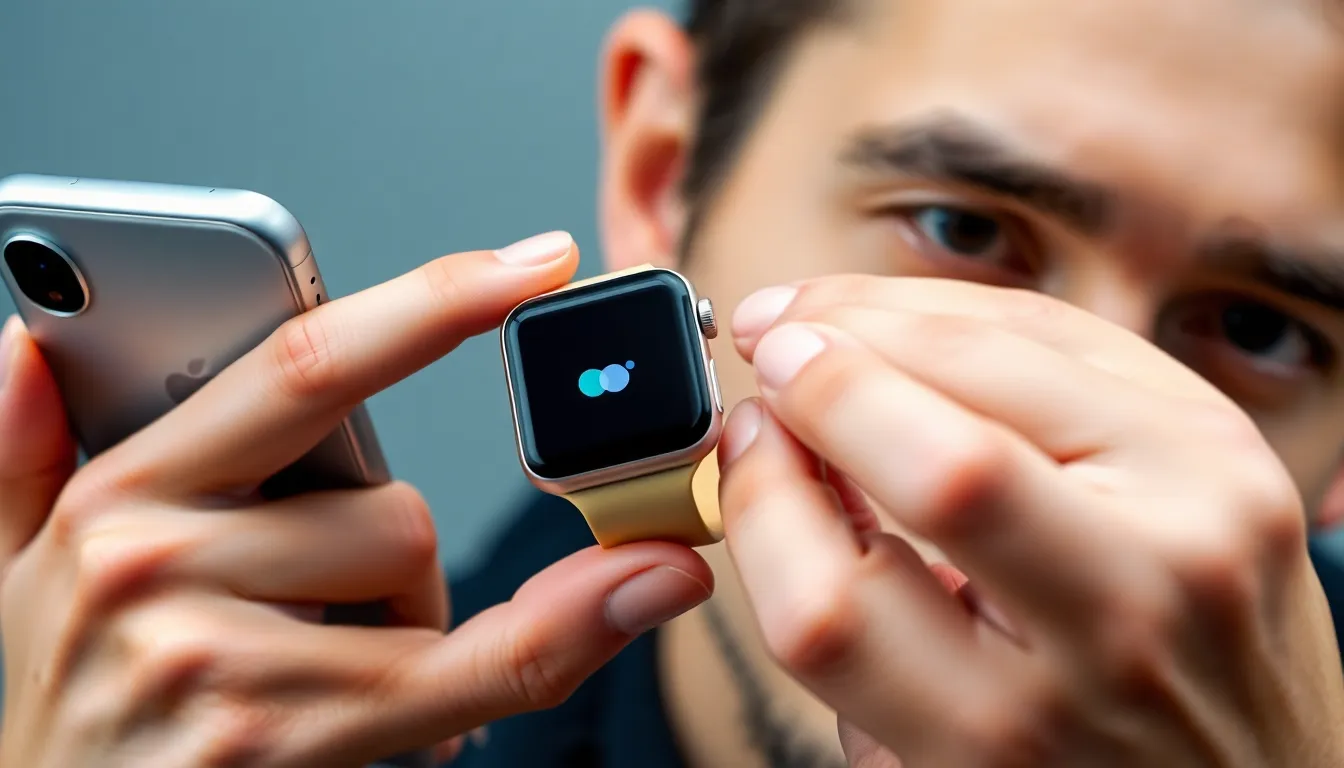
Connecting an Apple Watch to an iPhone involves several straightforward steps to ensure seamless functionality.
Preparing Your iPhone
Ensure Bluetooth is enabled on the iPhone. This setting allows the iPhone to communicate with the Apple Watch. Checking for the latest iOS update is essential. The iPhone must run at least iOS 15 for compatibility with Apple Watch models. Turn on Wi-Fi to enhance the connection experience. It’s also helpful to have the Apple Watch app installed on the iPhone. Users can find this app in the App Store if it’s not pre-installed. Making sure the iPhone is fully charged prevents issues during the setup process.
Setting Up Your Apple Watch
Begin by turning on the Apple Watch. Press and hold the side button until the Apple logo appears on the screen. After the watch starts, users will see a prompt to choose a language. Selecting the preferred language initiates the setup process. Next, users must ensure the Apple Watch is charged adequately for successful pairing. It is advisable to keep the watch close to the iPhone throughout this process. The user should also have their Apple ID credentials ready for logging into their account.
Pairing the Devices
Open the Apple Watch app on the iPhone. This step serves as the hub for managing the watch’s settings. Tap on “Start Pairing” on both devices. A swirling pattern should appear on the watch’s screen, prompting the user to bring the iPhone camera over this display. The camera scans the pattern to establish a connection. If the pairing occurs successfully, users receive a confirmation message. Follow the on-screen instructions to complete the setup process, which includes choosing settings and syncing apps. Keeping the devices together during this time ensures a smoother experience.
Troubleshooting Connection Issues
Connection problems between an Apple Watch and an iPhone can occur, but many common issues have simple solutions. Addressing these challenges quickly ensures a seamless experience with both devices.
Common Problems and Solutions
Disabling Bluetooth and Wi-Fi on the iPhone can impede connectivity. Turning these features back on can often resolve the issue. Restarting both devices frequently fixes minor software glitches that may interfere with the pairing process. If problems persist, unpairing and re-pairing the devices often resolves critical pairing errors. Ensure the Apple Watch is charged above 30% to avoid disconnection problems. Checking that both devices operate with the latest software is essential, as updates often include fixes for connectivity issues.
Tips for a Successful Connection
Begin by confirming that Bluetooth and Wi-Fi are enabled on the iPhone. Activation of Airplane Mode can hinder connection attempts, so it’s wise to turn that off. Properly positioning the Apple Watch near the iPhone often assists in stronger signal strength. Maintaining a charged battery on both devices contributes to reliable performance. Using the Apple Watch app on the iPhone facilitates a smoother pairing process, enhancing both devices’ functionality. Following these guidelines can minimize connection issues and ensure a hassle-free experience.
Connecting an Apple Watch to an iPhone opens up a world of convenience and functionality. By following the outlined steps and ensuring both devices meet compatibility requirements, users can easily enjoy features that enhance their daily routines. Staying updated on software and troubleshooting common issues further ensures a seamless experience. With the right approach, the Apple Watch becomes not just a stylish accessory but an essential tool for staying connected and organized. Embracing this technology can truly elevate one’s lifestyle.