

Imagine never losing your keys again—sounds like a dream, right? With Apple’s AirTag, that dream can become a reality. This nifty little device is here to save the day, helping you track down your belongings faster than you can say “Where are my car keys?” Setting it up on an iPhone is as easy as pie, and trust us, it’s way less messy.
Understanding AirTag
AirTag is a small tracking device developed by Apple for locating personal items. Users place AirTags on belongings like keys, wallets, or backpacks to track their location easily. This device connects to the Find My app on the iPhone, providing accurate real-time updates on the item’s whereabouts.
Equipped with Bluetooth technology, AirTag communicates with nearby Apple devices to relay its location. An extensive network of over a billion Apple devices worldwide ensures robust tracking capabilities. Users benefit from privacy features, such as anonymous and encrypted location data.
Focusing on usability, AirTag features a simple design with a replaceable battery lasting about a year. This battery type is easily available, allowing for quick replacements without needing to dispose of the entire device. Additionally, AirTag integrates with Siri, allowing for voice commands to locate items effortlessly.
Customization options also enhance the user experience. Users can personalize their AirTag with engravings, making it distinctive and easily identifiable. Notifications alert users if they leave an item behind, adding an extra layer of security.
Environmental concerns are addressed through AirTag’s eco-friendly materials. Apple prioritizes sustainability by reducing waste and utilizing recycled components. Overall, AirTag simplifies managing personal items while ensuring privacy and environmental responsibility.
Requirements For Setting Up AirTag
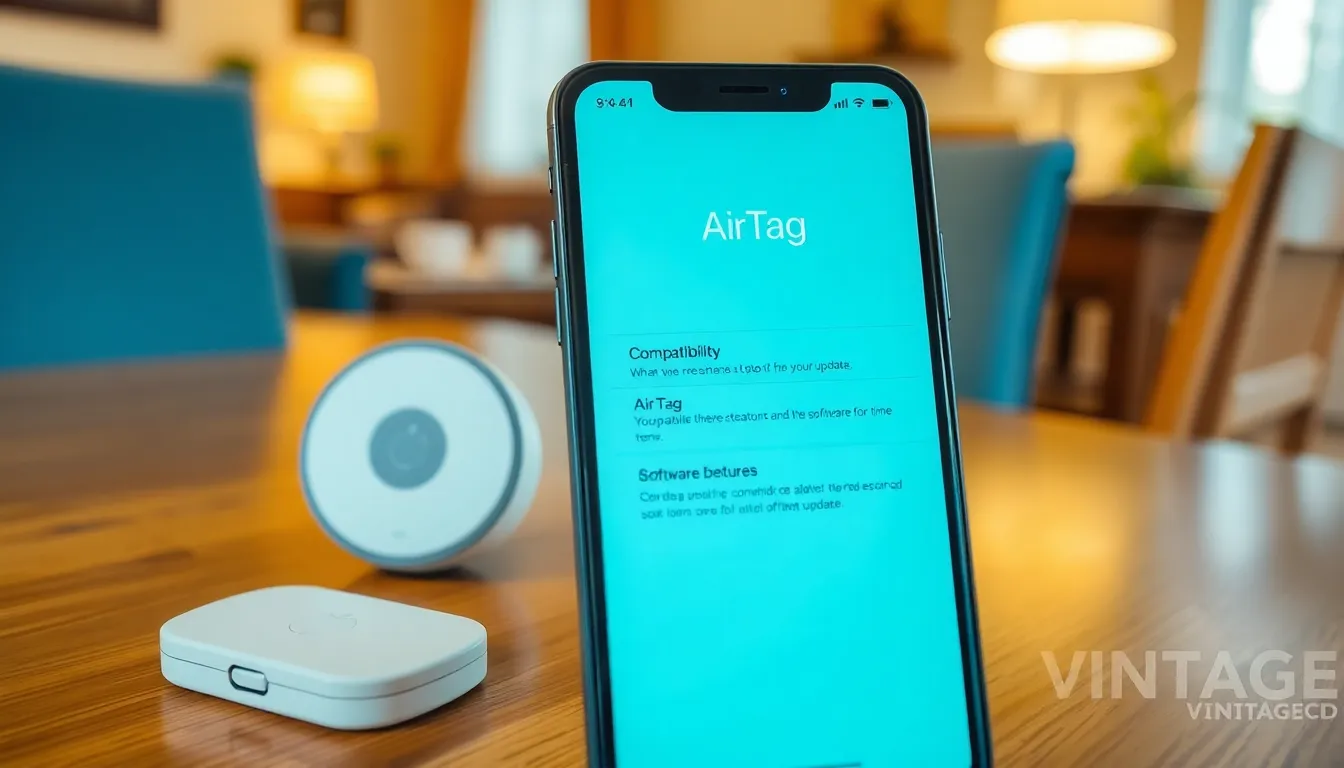
Setting up an AirTag involves specific requirements to ensure seamless functionality with an iPhone. Familiarity with compatible devices and software updates can help streamline the process.
Compatible iPhone Models
AirTags work with iPhone models starting from the iPhone 6s and newer. This includes the iPhone SE (1st generation), iPhone 7, 8, X, and all subsequent versions, including the iPhone 11, 12, 13, and 14 series. Most iPhones released after September 2015 support the necessary features for optimal AirTag performance. Users should confirm that their devices are within this range for effective tracking.
Necessary Software Updates
The setup process requires running iOS 14.5 or later. Users can check their current software version in the Settings app under General and About. To enhance compatibility, upgrading to the latest version of iOS is important, as Apple frequently releases updates that improve AirTag functionality. Updating an iPhone to the most recent software version ensures access to all features and security enhancements, enabling a smoother experience when pairing with an AirTag.
Step-By-Step Setup Process
Setting up an AirTag on an iPhone involves a straightforward series of steps. Follow this guide to enjoy the benefits of your tracking device.
Unboxing Your AirTag
Begin by carefully opening the AirTag packaging. Inside, users will find the AirTag itself, a user manual, and a battery already installed. Remove the plastic tab to activate the battery, making sure it’s ready for use. Ensuring a clean workspace helps to avoid losing any small components. In addition, inspect the AirTag for any damage before proceeding to the next step.
Adding AirTag to Your iPhone
Users can easily add the AirTag by bringing it close to their iPhone. The iPhone will recognize the AirTag instantly and display a prompt. Tapping on “Connect” starts the pairing process. Customized naming options enhance personalization; choose from a list of items or type a custom name. Once confirmed, the AirTag is now linked to the Find My app, making it simple to track belongings.
Configuring AirTag Settings
Configuring settings for the AirTag enhances its functionality. To access settings, open the Find My app and select the AirTag. Users can enable notifications for when they leave their items behind or set up sound alerts for easy locating. Privacy features automatically protect location data, ensuring it remains anonymous. Adjust settings as needed for optimal performance based on personal preferences.
Troubleshooting Common Issues
Users may encounter some common issues while using AirTag with their iPhone. Addressing these problems can enhance the overall experience.
Connection Problems
Connection issues can occur when an iPhone does not recognize the AirTag. Users should ensure Bluetooth is enabled on their devices. Checking for software updates becomes essential, as running outdated software can affect connectivity. Restarting the iPhone can resolve temporary glitches. Bringing the AirTag closer to the phone often establishes a successful connection. If the problem persists, removing and reinserting the battery in the AirTag could help reestablish the link. Verifying that the AirTag is not already paired with another Apple ID is crucial.
Location Accuracy Issues
Location accuracy can sometimes fluctuate. Factors such as distance from nearby Apple devices affect performance. Ensuring the Find My app has permission to access location services is important for optimal tracking. In some instances, strong interference from walls or other obstacles may hinder location updates. Adjusting the AirTag’s position can improve accuracy. Furthermore, users can enable Precision Finding, available on compatible iPhones, which enhances location accuracy using U1 chip technology. Regularly checking for updates to the AirTag firmware also helps ensure top performance.
Tips For Optimal Use
To maximize the effectiveness of AirTag, ensure to place it within the right belongings. Using AirTag on frequently misplaced items—like keys, wallets, or bags—improves tracking efficiency. Consistently check for software updates, enabling new features and security enhancements that keep the device functioning optimally.
Increasing accuracy can happen by enabling Precision Finding on compatible iPhone models. Utilizing this feature provides enhanced directional guidance and distance information, making locating items quicker. Rely on notifications about leaving items behind; setup alerts in the Find My app to stay informed.
Consider engaging Siri for effortless item location. Voice commands simplify tracking without opening apps, enhancing user experience. Customize names for each AirTag, making it easier to distinguish between personal items.
Regularly check the battery status to avoid unexpected downtime. AirTag batteries typically last about a year; having replacements on hand ensures continuous performance. While using AirTag, remember the environment—its eco-friendly materials reflect Apple’s commitment.
For optimal Bluetooth connectivity, keep the iPhone close to the AirTag when searching. Building a habit of using AirTag on daily essentials will enhance overall tracking effectiveness. Since AirTag integrates with a vast network of over a billion Apple devices, it can find items effectively, even in crowded spaces.
Always value user privacy, knowing that AirTag’s data remains anonymous and encrypted. Maintaining these practices helps reinforce secure and efficient tracking of personal belongings.
Setting up an AirTag on an iPhone is a straightforward process that enhances the ability to keep track of personal belongings. With features like real-time tracking and integration with Siri users can easily locate their items with minimal effort. The AirTag’s design and functionality cater to both convenience and privacy ensuring a seamless experience.
By following the setup steps and utilizing the tips provided users can maximize the benefits of their AirTag. Regular updates and proper maintenance will further enhance its performance. Embracing this innovative technology not only simplifies daily life but also reflects a commitment to sustainability and privacy.