
Table of Contents
TogglePublic opinion shapes the political landscape more than a cat meme shapes the internet. Understanding how it influences government decisions is crucial for anyone diving into AP Government. From polls to protests, public sentiment can sway politicians faster than you can say “voter turnout.”
Understanding Public Opinion in AP Government
Public opinion represents the collective attitudes and beliefs of individuals regarding political issues and government actions. This sentiment shapes policymaking, as elected officials often rely on public input to gauge support for various agendas. Polls serve as a primary tool to measure these opinions, indicating how constituents feel about topics ranging from healthcare to immigration.
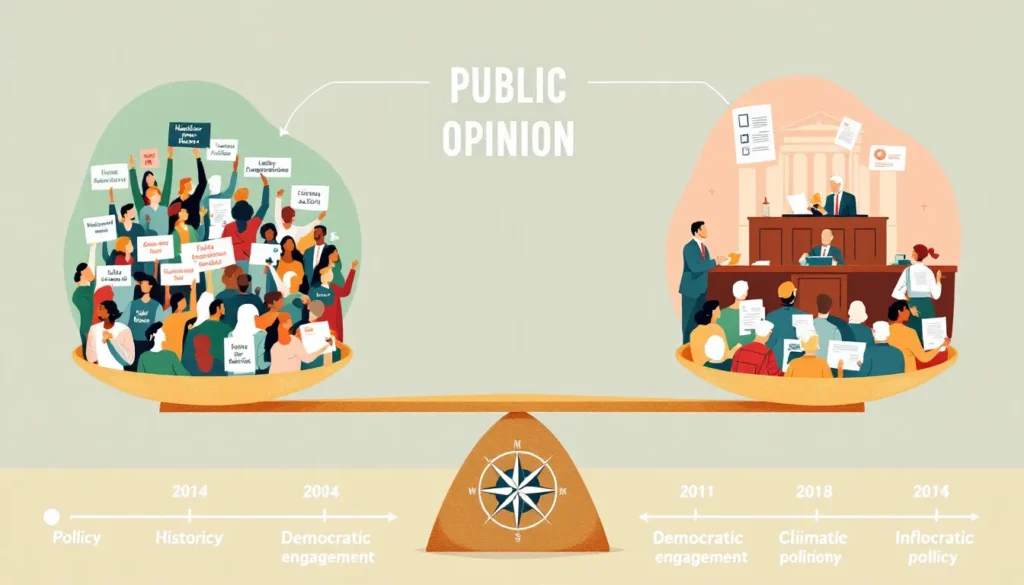
Protests and social movements also embody public opinion, demonstrating collective discontent or enthusiasm regarding specific causes. Historical examples, such as the Civil Rights Movement, illustrate how public sentiment can mobilize large groups and drive significant legislative change.
Voting behavior reflects public opinion, with voter turnout often fluctuating based on prevailing sentiments. Elections frequently hinge on key issues; candidates adapt their platforms to align with public expectations. Political parties analyze opinion data to strategize their campaigns effectively, aiming to resonate with their target electorate.
Students in AP Government benefit from understanding public opinion’s role. They analyze how media influences public perception, explore different polling methodologies, and assess the implications of demographic factors. By studying these aspects, students grasp the importance of public opinion in shaping political discourse and outcomes.
The dynamic nature of public opinion necessitates continuous monitoring. Rapid changes in societal attitudes can lead to shifts in political priorities. Recognizing these trends equips future leaders with the insight needed to navigate a complex political landscape.
The Role of Public Opinion
Public opinion significantly affects the political landscape, directly influencing government decision-making.
Influencing Political Decisions
Elected officials often consider public sentiment while crafting policies. Rapid changes in public opinion can prompt quick shifts in political priorities from leaders. Polling data provides insights into voter preferences, allowing politicians to tailor their messages. Gubernatorial races illustrate this dynamic, where candidates adjust platforms based on constituents’ feedback. Advocates for specific issues, such as climate change or healthcare reform, leverage public opinion to garner support for legislative initiatives. Notably, social media amplifies public voices, enabling grassroots movements to reach wider audiences and placing pressure on policymakers. Public opinion shows that voters respond to issues that matter to them, reinforcing the importance of staying attuned to societal attitudes.
Shaping Policy Outcomes
Public opinion serves as a crucial element in determining policy outcomes. Policymakers often rely on polls to gauge the feasibility of proposed legislation. When public support is strong, officials may prioritize those policies, increasing chances of successful implementation. Historical examples, such as the legalization of same-sex marriage, highlight how shifting societal attitudes can lead to major policy changes. Public protests and advocacy campaigns mobilize individuals, emphasizing collective action’s power in driving political change. Overall, public opinion helps shape the legislative agenda, providing a feedback mechanism for elected officials to respond to their constituents’ concerns. Understanding these dynamics equips students with necessary insights for navigating political environments.
Measuring Public Opinion
Measuring public opinion involves various techniques that help gauge the attitudes and beliefs of the populace. Understanding these methods proves essential for interpreting the political landscape.
Surveys and Polling Methods
Surveys and polling methods represent primary tools for quantifying public sentiment. Various types of surveys, including telephone interviews, online questionnaires, and in-person polling, enable researchers to reach different demographics. Random sampling techniques ensure that data reflects the broader population accurately. Pollsters often analyze demographic factors, such as age, gender, and ethnicity, to identify trends. For example, tracking support for specific policies or candidates across various groups provides valuable insights for political strategists. Additionally, exit polls offer immediate feedback after elections, highlighting voter motivations and preferences, impacting future campaigns directly.
Challenges in Data Collection
Challenges in data collection can complicate the measurement of public opinion. Response bias often arises from participants providing socially desirable answers rather than their true beliefs. With the increasing prevalence of mobile devices, reaching certain populations becomes more difficult, leading to representation issues. Substantial variation in survey methodologies introduces potential inconsistencies in data. Carefully designed questions are crucial, as leading or ambiguous wording can skew results. Furthermore, rapid shifts in public sentiment may not get captured promptly by standard polling methods. Navigating these challenges demands rigorous attention to detail, ensuring that public opinion remains reliable and valid.
Factors Affecting Public Opinion
Public opinion is influenced by various factors that shape collective attitudes and beliefs. Understanding these factors is crucial for comprehending the dynamics of the political landscape.
Demographic Influences
Demographics play a vital role in shaping public opinion. Age groups often exhibit distinct preferences regarding policy issues, with younger individuals typically prioritizing social justice and older individuals focusing on economic stability. Education levels influence perspectives as well; those with higher education tend to support progressive policies more than those without. Geographic location also affects attitudes, with urban areas generally leaning towards liberal views while rural regions often uphold conservative beliefs. Additionally, factors such as race and ethnicity contribute significantly to shaping opinions on critical matters. Each demographic characteristic uniquely influences viewpoints, making it essential to analyze these variations in public sentiment.
Media Impact
The media significantly impacts public opinion by framing issues and influencing perceptions. News outlets often shape narratives that guide audience views on political issues. Furthermore, social media amplifies messages, allowing individuals to share opinions quickly and broadly. Active engagement on platforms like Twitter and Facebook can influence public discourse, making it easier for grassroots movements to gain momentum. Continuous exposure to specific narratives can lead to changes in public sentiment, particularly during election cycles. The media’s role in shaping perceptions underscores the importance of analyzing both traditional and social media’s effects on public attitudes.
Public opinion serves as a powerful force in shaping the political landscape. Its influence on government decisions and legislative priorities cannot be underestimated. As students of AP Government learn, understanding public sentiment is crucial for navigating the complexities of politics.
With the ability to shift rapidly, public opinion can mobilize citizens and drive significant changes in policy. By closely monitoring trends and utilizing polling data, elected officials can align their agendas with the needs and desires of their constituents.
The interplay between demographics, media, and public attitudes further complicates this dynamic, highlighting the necessity for ongoing analysis. In a world where public opinion can change overnight, staying informed is essential for both policymakers and citizens alike.